
By: Gareth Bowley
There is something deeply encouraging about seeing what happens when faithful gospel partnership is given time to take root.
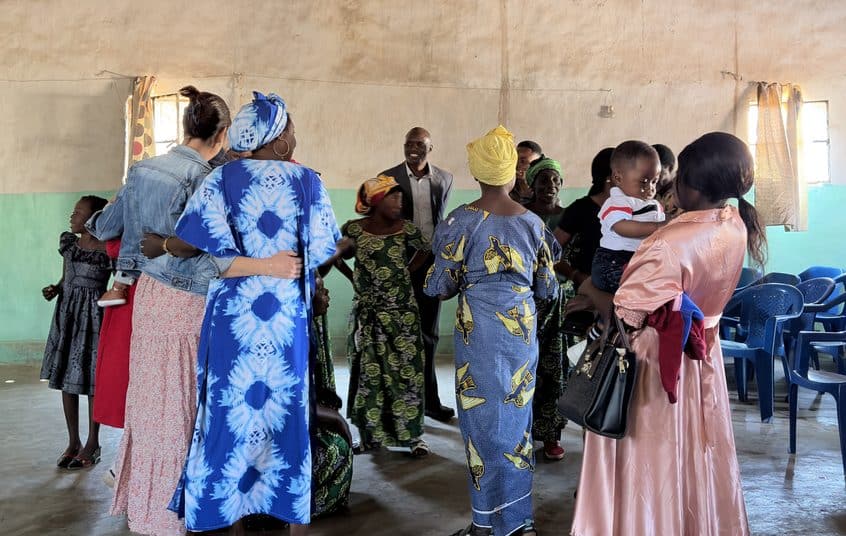
Our July 2026 visit to the Democratic Republic of Congo was another significant milestone in the ongoing work among church leaders in Haut-Katanga Province. Across Likasi and Lubumbashi, we saw growing evidence that the gospel is not simply being taught, but is shaping leaders, marriages and local churches.
For the past three years, Advance has been walking alongside church leaders through the Church Planter Mentorship Programme (CPMP). This July, the impact was tangible.
The questions were deeper. The discussions were more mature. Leaders demonstrated a growing understanding of biblical eldership and servant leadership. And perhaps most encouragingly, there was a clear desire to take what they were learning and put it into practice in their churches.
A first visit to Likasi
One of the highlights of the trip was our first visit to Likasi, around 120km from Lubumbashi.
Around twenty churches in the city are now connected to CPMP, with leaders having faithfully participated in the programme for almost three years and preparing to graduate.
The visit included preaching in local churches, meeting church leaders, and hosting a Marriage & Ministry seminar for CPMP couples, alongside others who are hoping to begin the programme in 2027. It was a valuable opportunity to strengthen relationships and see firsthand the fruit of the training taking place.
“What kind of church should we build?”
Back in Lubumbashi, the annual Advance Leadership Conference brought together existing CPMP participants, pastors interested in Advance, and church leaders exploring future involvement.

The central teaching theme was simple but foundational:
What kind of church should we build?
Across four sessions, the team worked through Ephesians, considering the identity, leadership, and mission of a healthy local church.
The teaching was accompanied by extensive contextualised question-and-answer sessions, allowing leaders to wrestle with how biblical principles apply within their own churches and communities. Teaching was translated primarily into Swahili, with French used where required.
The conference also provided a platform for focussed ministry for men and women. Nadine led sessions on godly wives and elders’ wives while I, Gareth, taught on Jesus as the biblical model of manhood and then on eldership through the lens of shepherd leadership.
From hearing to becoming
Perhaps the greatest encouragement from the trip was seeing the difference between those who were attending an Advance event for the first time and those who had been journeying with us for several years.
The change was visible.
There was increasing theological maturity, better questions, a clearer understanding of biblical eldership, and visible servant-hearted leadership. Leaders were diligent in taking notes and eager to implement what they were being taught.
The evidence suggests that the teaching is moving beyond the conference room. It is beginning to shape churches and leaders.
And this is exactly what gospel partnership is about.
A movement beginning to grow
The July conference also revealed exciting opportunities for the future.
One senior leader representing approximately 40–50 churches from the Likasi area attended the conference. Having seen the teaching and culture of Advance firsthand, he expressed a strong desire for churches in his wider network to begin the Church Planter Mentorship Programme in January 2027.
There are also plans for a new CPMP cohort in January 2027, continued gatherings for graduates, expository preaching training beginning later this year, and, once translation is complete, further theological development through the Advance Theology Course in French.
The hope is not simply to see more churches connected to Advance, but to see healthy, gospel-centred churches established and strengthened across the region.
Part of that vision includes developing two or three model base churches that can become places for training, leadership development, and practical demonstration of healthy eldership and church life.
Faithful leaders in difficult circumstances
The work is not without significant challenges.
Church leaders are serving in conditions of profound poverty and hardship. There are practical and legal obstacles to overcome, and sustainable structures to support its continued growth.
Yet alongside those challenges, there is remarkable joy, humility and spiritual maturity.
David Ngoy, who has coordinated CPMP, overseen and trained pastors across two cities, travelled extensively, organised conferences, and fathered church leaders for the past three years, has carried this ministry entirely by faith and without financial support.
Behind every conference, training programme and church are faithful men and women giving themselves to the work of Christ.
Looking ahead
There is much to pray for and much to look forward to.
The current CPMP cohort in Likasi and Lubumbashi is expected to graduate by the end of 2026. A new cohort is planned for January 2027, with leaders from both cities. Expository preaching training is set to continue for at least three years, and further opportunities are being explored around theological education, entrepreneurship and Next Generation ministry.
But perhaps the most significant thing to celebrate is what is already happening.
Over these past three years, churches in the DRC have increasingly embraced gospel-centred ministry, servant leadership, biblical plural eldership, healthy marriages and faithful biblical teaching.
This is gospel reformation that takes time.
It happens as leaders are taught, shaped, encouraged and equipped. It happens as biblical convictions become everyday church practices. It happens as one healthy church influences another, and as leaders faithfully invest in the next generation.
And in the DRC, we are privileged to be seeing that process unfold.
Please pray for the church leaders of the Democratic Republic of Congo, for the continued strengthening of healthy local churches, and for the gospel to spread throughout the region.
We are deeply grateful for the opportunity to partner with these leaders and to witness the ongoing work of God among his church in the DRC.